Each year, more candidates enter clinical development, each requiring a manufacturing pathway that barely existed a generation ago.
A significant share of these molecules are, or can be, produced through microbial fermentation. This is a quieter shift than the headlines suggest, but it is reshaping how oncology proteins move from discovery to clinic, and which manufacturing partners can credibly support that journey. Whenever possible, microbial production of these proteins is simply unbeatable.
Why microbial production is gaining ground in oncology
For decades, the default production system for therapeutic proteins was mammalian cell culture, typically CHO cells. This remains essential for complex glycoproteins where post-translational modifications drive function. But not every oncology protein requires that complexity. A significant and increasing portion of the pipeline consists of molecules where microbial expression systems offer real advantages: faster development, lower cost, simpler scale-up, and a manufacturing footprint that is more compatible with the economics of modern drug development.
E. coli, Pichia pastoris, Bacillus and other engineered yeast platforms now produce a wide range of oncology-relevant proteins. Therapeutic enzymes, peptides, antibody fragments, scaffold proteins, fusion constructs, many of these molecules are better suited to microbial systems than to mammalian cell culture, both technically and commercially.
The shift is not about replacing mammalian platforms. It is about matching the production system to the molecule, rather than forcing every protein into the same manufacturing framework.
The early-stage bottleneck
Oncology programs face unusual development pressure. The clinical urgency is high, the patient populations often defined and waiting, and regulatory pathways favor speed when the medical need is clear. Speed is also associated with the need to be first to patent and to commercialize. But the molecules themselves are increasingly complex, and the manufacturing process must be developed alongside the therapeutic concept rather than after it.
This creates a bottleneck that most drug developers know too well. Early-stage protein development requires expertise that academic labs rarely have at full industrial standard, and large CDMOs may be reluctant to invest for projects that have not yet reached commercial scale. The molecules that need the most careful early development are precisely those that struggle to find appropriate manufacturing partners.
What these programs need is not large-scale manufacturing. They need rigorous early-stage development work, done in a GMP-compliant environment, by teams that understand both the science and the eventual industrial trajectory.
What early development actually requires
A protein therapeutic that will eventually reach oncology patients must pass through development stages during which the science is still evolving while facing production and regulatory standards already high. Purity expectations alone can be extreme: oncology patients are immunocompromised and often heavily treated, so residual host cell proteins, endotoxins, nucleic acids, and process impurities must be controlled to levels that exceed most other therapeutic categories.
The microorganism itself must be characterized: genetic stability, expression consistency, host cell behaviour profile, freedom from adventitious agents, etc. Master and Working Cell banks must be established under conditions that will support eventual regulatory filings. This is foundational work, often underestimated until problems emerge later.
The fermentation process must be optimized for the specific molecule, although some generic platform conditions may apply. Temperature, induction strategy, feed profile, oxygenation, each parameter affects product quality. For oncology proteins, where quality attributes drive both efficacy and safety, this optimization cannot be deferred to later stages.
Downstream processing must be developed with the final product profile in view. Purification yields, impurity removal, formulation compatibility, all of these decisions ripple through the project. A purification scheme that works at small scale may fail entirely at clinical scale, and the time to discover this is during product development, not during tech transfer to a commercial manufacturer.
Analytical methods must be developed in parallel. Identity, purity, potency, stability, each requires methods that are appropriate for the molecule and that will support clinical and regulatory submissions. Building these methods early is what allows the project to move forward with confidence.
The cGMP question
For oncology proteins entering clinical development, cGMP compliance is not optional. It is the threshold that separates a research project from a drug candidate. But cGMPs at early stages look different from GMPs at commercial scale. The challenge is to maintain quality standards while preserving the flexibility that early development requires.
Working in a GMP-compliant environment from the outset, even at small scale, allows the project to generate material that can support pre-clinical safety studies and early clinical trials without requiring later re-development. It also allows the project to accumulate documentation, characterization data, and process history that will be needed for regulatory submissions years later.
This is where the manufacturing partner makes a structural difference. A facility designed for early-stage GMP work, with quality systems calibrated for the realities of development rather than commercial production, allows oncology programs to move with both rigor and speed.
Where LifeLore fits in oncology development
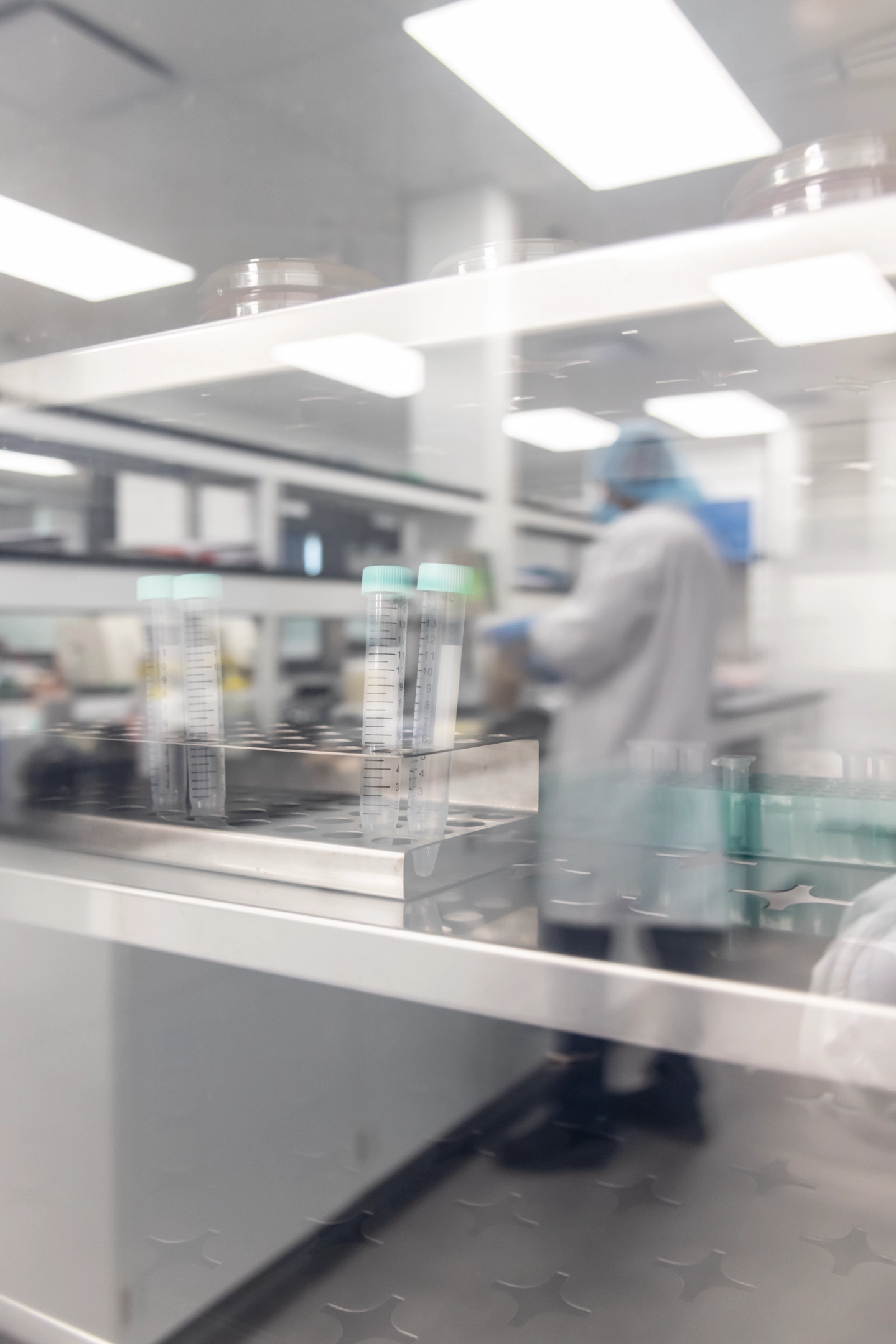
LifeLore Pathways was built to occupy this specific space. Operating from a GMP-compliant facility in Montreal, the organization focuses on early-stage microbial development — the stretch between proof of concept and industrial readiness, where most therapeutic programs either consolidate their value or quietly lose it.
For oncology proteins, this positioning matters. The work that determines whether a candidate becomes a viable drug involves several steps such as: strain development, process optimization, analytical method establishment, early GMP material production, etc. Often, this will need to happen before the project is large enough to attract commercial manufacturers. LifeLore takes on this stage as a dedicated partner, with the flexibility that early development requires and the rigor that oncology R&D demands.
The continuum with Proventus extends this capability. As programs advance, the same scientific understanding can carry forward into industrial scale-up, fermentation volume production, from laboratory scale to commercial volumes, with the formulation, encapsulation, and finishing capabilities that protein therapeutics ultimately require. Early decisions made at LifeLore are informed by what will eventually be needed at scale, reducing the risk of process disconnects later in development.
The opportunity ahead
The companies developing the next generation of oncology proteins will be those that find the right partners early, while the project can still be shaped, and while the science and the manufacturing strategy can still evolve together. The molecules that arrive at scale already prepared, with their quality attributes characterized, processes validated, analytical methods established, will be the ones that reach patients fastest.